
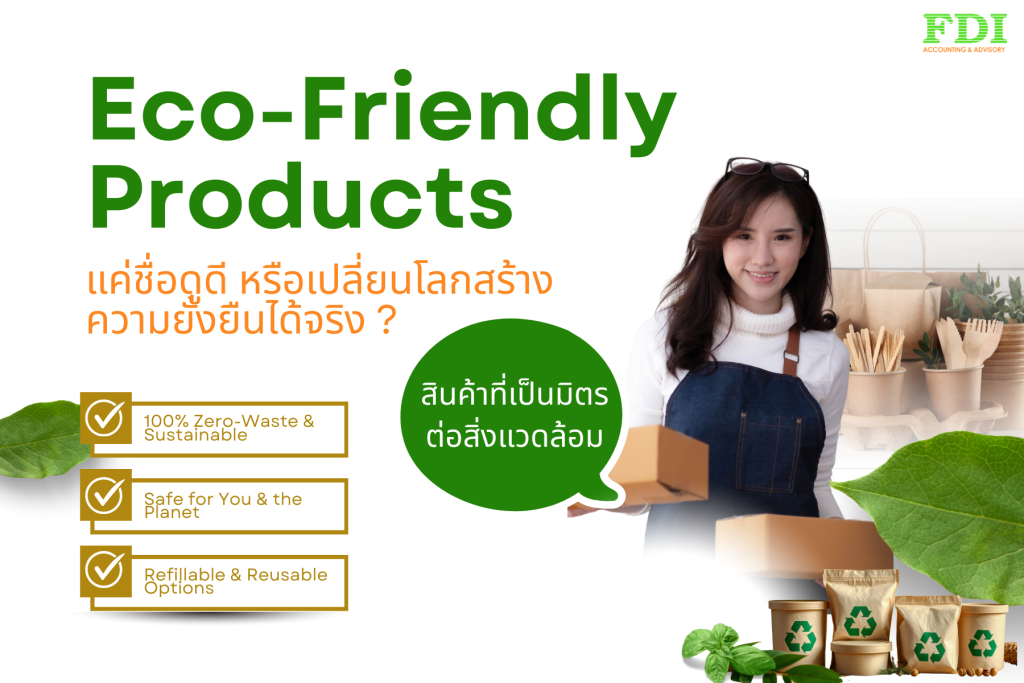
What are Eco-Friendly Products ?
Eco-Friendly Products refer to products that are designed and manufactured with the goal of minimizing environmental impact throughout their entire life cycle from sourcing, production, transportation, and usage to end-of-life management, such as recycling or natural decomposition. These products are created to reduce harm to the planet and the environment as much as possible, with clear environmental management approaches, aiming to be less harmful or entirely harmless to living organisms and ecosystems.
The key characteristics of eco-friendly products include:
- Use of sustainable materials
- Use of clean energy in the production process
- Reduction of carbon footprint
- Biodegradable or recyclable packaging
- User- and animal-friendly (cruelty-free / non-toxic)
“Eco-friendly products” — just a good name, or can they truly change the world and create sustainability?
According to a report by the United Nations Environment Programme (UNEP), the global manufacturing industry is responsible for up to 45% of total greenhouse gas emissions. This means that shifting consumer and business behavior toward eco-friendly products can have a significant impact on the future of our planet. It clearly illustrates why the modern world must place greater emphasis on environmentally friendly products — an area that deserves close attention and collective effort. With increased promotion and support for this product category, numerous positive outcomes can be achieved.
Eco-friendly products are planned with a more comprehensive approach across the entire supply chain, carefully designed from upstream to downstream. To illustrate clearly, this means:
- Upstream: Raw materials that do not harm the environment, such as organic cotton, sustainably grown wood, or recycled plastics.
- Midstream : Raw materials that do not harm the environment, such as organic cotton, sustainably grown wood, or recycled plastics.
- Downstream : Distribution channels that reduce carbon emissions, such as centralized transportation and the use of packaging that does not generate additional waste.
- End-of-Life : Biodegradation, recycling, or take-back systems with structured management for proper disposal and recovery.
Examples of familiar brands include:
- Clothing made from recycled plastic bottles :Brands such as Patagonia and Adidas have developed sportswear and shoes using recycled PET bottles, helping to reduce plastic waste and lower energy consumption compared to producing new materials.
- Paper-based packaging instead of plastic :Starbucks, McDonald’s, and Amazon are accelerating the shift of their packaging systems to be more environmentally friendly.
- Non-toxic cleaning products:Brands like Seventh Generation focus on user safety and protecting water sources.

Green market in Thailand: Trends and directions of eco-friendly products in 2025
This year, it is clear that in Thailand, major brands are actively developing eco-friendly products. For example, Central promotes Green Products and Local Eco Products throughl the "Hug The Earth" project, , while ThaiBev uses 100% recyclable bottles, operates a "PET Bottle Return" program with a bottle circulation system, and produces items from recycled aluminum and FSC-certified paper boxes.
Eco-friendly products are increasingly growing among consumers and SME entrepreneurs, particularly in organic businesses, zero-waste stores, and even in the fashion and cosmetics industries that are shifting to natural raw materials.
Interesting examples include the brand “ReReef,” which produces coral tiles from leftover materials to reduce waste and help restore nature; “Happy Earth Farm,” which sells organic agricultural products with biodegradable packaging; and brands familiar to food entrepreneurs, such as Gracz, which offers biodegradable containers made from bagasse, including plates, bowls, and lunch boxes produced from leftover bagasse from the sugar industry. There are also many other SMEs offering fascinating eco-friendly products. In the next article, we will take a closer look stay tuned!
Positive impacts on society
- Raise awareness and encourage entrepreneurs and consumers to actively participate in driving environmental sustainability together.
- Product manufacturing reduces greenhouse gas (GHG) emissions in the production process, which, as is well known, are a major cause of global warming.
- It helps reduce waste in the environment, as used products can be processed into new items or naturally biodegrade.
- Creates new business opportunities (Green Economy) for greater growth, aligns with consumer behavior trends, and enhances the brand’s credibility on a global level.
Consumer perspectives: 5 reasons why we should support eco-friendly products
- The reason is that these products reduce the impact of climate change, use clean energy, or have low carbon emissions, playing a significant role in lowering greenhouse gas emissions and addressing various environmental issues.
- They help reduce plastic waste and marine litter, particularly from single-use items, which in turn prevents numerous related environmental problems.
- They support the “Circular Economy,” with products that enable resource circulation, such as those made from recycled materials, refills, or items that can be reused.
- It drives businesses to change. As is well known, small players alone may not create significant impact, but when consumers “vote with their wallets,” brands naturally adapt to consumer preferences, leading to positive outcomes.
- Promotes environmental sustainability and improves quality of life by reducing air, water, and soil pollution from traditional production processes, as well as minimizing chemical residues in products.
In conclusion, supporting eco-friendly products is not just a stylish choice or a matter of image; it is a powerful action by consumers that can truly change the world. Choosing products that are environmentally friendly, reducing plastic use, supporting transparent brands, verifying sources, production practices, waste management, and recycling processes—all of these play a crucial role in driving businesses toward more sustainable practices.
As an environmental and sustainability consultant, FDI Group encourages consumers and organizations in Thailand to collaborate and prioritize environmental change. Beyond benefiting the planet, this also creates long-term economic value, enhances competitiveness, and aligns with ESG, SDGs, and the country’s future BCG policy trends.
If you or your organization wish to take action on environmental initiatives, FDI is ready to serve as your environmental and sustainability consultant. We provide guidance on strategies and business operations based on the BCG model, driving ESG initiatives while focusing on the activities of your company and its partners. Our aim is to maximize organizational benefits and sustainability, along with advice and proposals on related business opportunities.
Contact Us
- Facebook: FDI Group – Business Consulting
- @fdigroup
- Phone : 02-642-6866, 02-642-6869, 02-642-6895
- E-mail : infojob@fdi.co.th
รู้จักกับมาตรฐาน ISO 14064 และ ISO 14067 ที่เกี่ยวกับการลดคาร์บอน

รู้จักมาตรฐาน ISO 14064...
Read More
Want to start with ESG and don't know where to begin? ESG Consulting services can help.
What is ESG Consulting...
Read More
GRI Standard: The essential standard for ESG data disclosure for organizations
What is a GRI Standard?.
Read More