

Why reduce greenhouse gases? Why is it important?
As we are familiar with and understand from global climate change mitigation efforts, countries have campaigned and collaborated to ensure that all sectors work together to drive greenhouse gas reduction policies. The increase in greenhouse gases is a major cause of global warming, extreme weather, natural disasters, and risks to the economy, health, and food security worldwide. This problem cannot be solved by any single sector alone; it requires urgent, simultaneous cooperation among businesses, individuals, and the government. For the business sector, reducing carbon emissions helps lower regulatory risks, energy costs, and enhances competitiveness in a low-carbon economy. Individuals play a key role through energy use, transportation, consumption, and waste management behaviors, which, when adopted widely, create significant positive impacts. Meanwhile, the government is responsible for setting policies, providing infrastructure, and offering incentives to accelerate the transition to a low-carbon society.
Therefore, collaborating to reduce greenhouse gas emissions is not just about protecting the environment—it is about maintaining economic stability, quality of life, and a sustainable future for humanity in the long term.
Did you know… How many types of greenhouse gases are there?
Greenhouse gases in the atmosphere come in various types, including both naturally occurring gases and those resulting from human activities. For the T-VER program related to FDI’s environmental and sustainability services, seven greenhouse gases are considered: Carbon dioxide (CO₂), Methane (CH₄) , Nitrous oxide (N₂O) , Hydrofluorocarbons (HFCs),Perfluorocarbons (PFCs),Sulfur hexafluoride (SF₆) , Nitrogen trifluoride (NF₃)
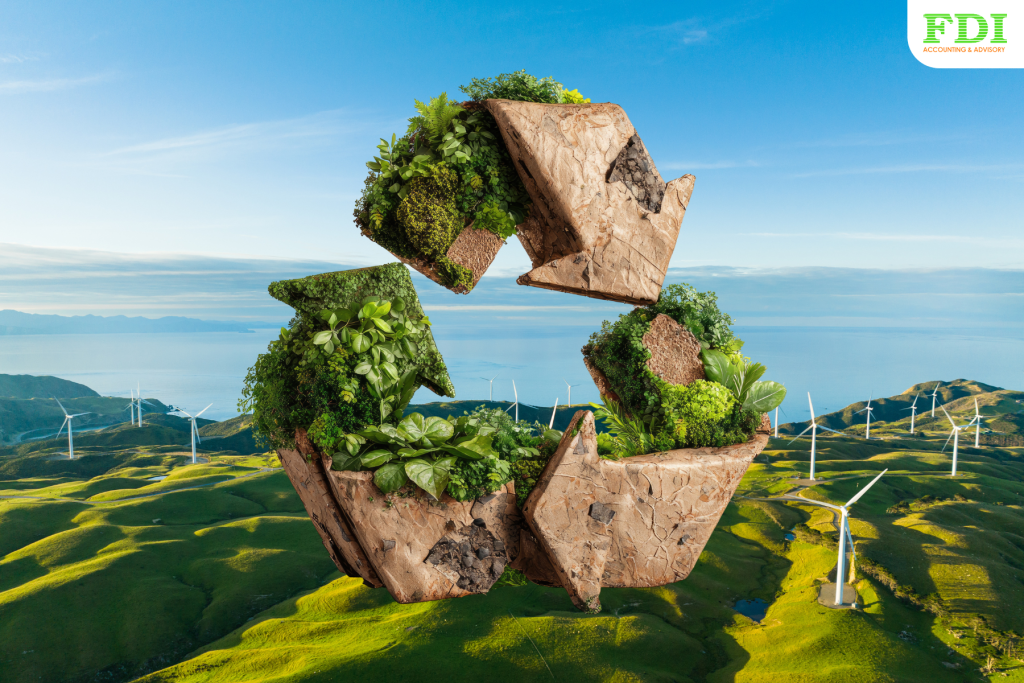
Why do we need to start reducing greenhouse gas emissions today?
Greenhouse gases are the main cause of global warming, which leads to:
- Rising global temperatures, leading to a hotter planet.
- More extreme weather events and severe seasonal changes, broadly impacting nature, humans, and other living beings.
- Increased occurrences of floods, droughts, and wildfires.
- Impacts on health, the economy, and food security.
Reducing greenhouse gas emissions is therefore not just about “saving the planet,” but about protecting the long-term quality of life for all of us in a more sustainable way.
This article therefore compiles 0 practical ways to reduce greenhouse gas emissions at home, allowing everyone to immediately contribute to caring for the planet through simple actions.
1.Use air conditioners efficiently and set the temperature appropriately.
Air conditioners are high-energy appliances in the home. Setting the temperature at 25°C or higher can significantly reduce electricity consumption and carbon emissions.
2. Turn off lights and unplug devices when not in use.
Most electricity is still generated from fossil fuels, so using more than necessary effectively increases carbon emissions. Simple actions you can take include:
- Turn off the lights immediately when leaving a room.
- Unplug electrical appliances that are not in use.
- Use power strips with an on/off switch.
3.Switch to LED lighting and more energy-efficient appliances.
With modern technology, we can reduce electricity consumption. LED bulbs use significantly less power than traditional bulbs, and appliances with a 5-star energy rating help save energy much more effectively in the long run.
4.Use public transportation and reduce private car usage when not necessary.
The transportation sector is one of the highest sources of greenhouse gas emissions, and carbon from car usage is a major contributor to the greenhouse effect, which leads to global warming. We can change our behavior by walking or cycling for short distances, switching to public transportation for more convenient travel, or carpooling when schedules allow.
5.Separate waste and reduce organic waste.
Food waste in landfills emits methane, which is far more potent in causing global warming than carbon dioxide. For this reason, waste should be managed properly from the source—for example, separating food scraps from general waste, composting spoiled food and plant materials, or planning meals carefully to avoid leftovers.
6.Reduce the use of single-use plastics.
Reduce waste from single-use plastics by carrying your own cloth bags, reusable cups, food containers, and utensils. Say no to plastic bags and straws when unnecessary, and choose reusable or biodegradable packaging. This helps decrease waste, protect the environment, and save money.
7.Use more renewable and clean energy whenever possible, such as:
- Install a solar power system: This is the most popular method in Thailand due to year-round sunlight. It can be installed on rooftops to generate electricity for personal use, helping reduce monthly electricity bills and fossil fuel consumption.
- Use energy-efficient appliances and lighting: Switch to LED bulbs, which consume less electricity than traditional incandescent bulbs, and choose appliances with a 5-star energy efficiency rating.
- Use electric vehicles (EVs): This reduces fuel consumption and lowers air and noise pollution in cities.
8.Increase green spaces at home.
Increasing green spaces at home helps mitigate global warming directly, as trees absorb carbon dioxide and release oxygen. They also help lower surrounding temperatures by providing Increasing green spaces at home helps mitigate global warming directly, as trees absorb carbon dioxide and release oxygen. They also help lower surrounding temperatures by providing
9.Choose to support environmentally conscious businesses.
Consumer purchasing decisions influence market trends. Choosing products and services from companies with carbon reduction policies, sustainable materials, or ESG-aligned practices helps drive businesses to reduce greenhouse gas emissions on a larger scale.
10.Encourage those around you to take action together.
Encouraging people around you to participate in climate-friendly activities can immediately help reduce greenhouse gas emissions, starting with simple, shared actions such as reducing plastic use, carrying cloth bags, turning off unused lights, using public transportation, planting trees, and separating waste. Beyond lowering carbon emissions, these actions help foster a real environmental culture within your local community, for example:
- Carry your own cloth bags and reusable cups: Encourage friends or family to refuse plastic bags and disposable cups by starting with bringing personal cloth bags and water bottles.
- Separate waste and recycle: Encourage setting up bins to sort food scraps, plastics, and paper so they can be properly disposed of or recycled.
From the 10 tips mentioned above, reducing greenhouse gas emissions is not distant or out of reach. Individuals can start taking action without launching large projects. Simply saving energy, reducing car usage, adjusting eating habits, managing waste, and making mindful purchasing choices can help lessen environmental impact every day.
Finally, the most important thing is:“Don’t wait until you’re fully ready—start with the smallest step… starting today.”Every small action we take becomes a great hope for our planet, helping to reduce global warming and create a more sustainable future for all living beings on Earth.
Contact Us
- Facebook: FDI Group – Business Consulting
- @fdigroup
- Phone : 02-642-6866, 02-642-6869, 02-642-6895
- E-mail : infojob@fdi.co.th
- Website : www.fdi.co.th

Want to start with ESG and don't know where to begin? ESG Consulting services can help.

What is ESG Consulting...
Read More
GRI Standard: The essential standard for ESG data disclosure for organizations
What is a GRI Standard?.
Read More
What is a Sustainability Report? Guide, steps, and professional preparation methods
What is a sustainability report? Why modern businesses cannot ignore it...
Read More