
In recent years, “Digital Nomad Thailand” has become a highly searched term among online professionals worldwide. Thailand is widely regarded as a paradise for remote workers, thanks to its reasonable cost of living, reliable internet connectivity, excellent cuisine, and well-developed infrastructure in both major cities and popular tourist destinations. In addition, the country offers convenient flight connections to many destinations across Asia, making it an attractive hub for location-independent professionals.
However, a common concern among many people is: “If you want to become a digital nomad in Thailand, which visa should you use to stay legally for the long term?” This article will introduce the main visa options available, along with essential insights for anyone interested in Thailand’s visa requirements.
Who Is a Digital Nomad ?
A digital nomad is a person who works online from anywhere, without the need for a fixed office.
Digital nomads rely on technology such as the internet and computers as their primary tools for work. They typically lead a mobile lifestyle, moving between cities or countries based on personal preference. Most of their income is generated from online work or foreign-based companies, making this lifestyle well suited to the modern era of remote work, where individuals can work and travel simultaneously. Common professions associated with digital nomads include programmers or developers, digital marketers, freelance writers, copywriters, bloggers, UX/UI designers, and employees of overseas companies who work fully remotely.
Many countries around the world have begun introducing “digital nomad visas” to attract this group of remote workers, including Malta, Portugal, and Costa Rica. These visas typically require applicants to earn income from overseas, maintain valid health insurance, and avoid competing with local employment. In Thailand, similar efforts have been made to attract digital nomads. Although the country does not use the exact term “Digital Nomad Visa,” several visa categories have been designed to accommodate remote workers and individuals who earn income from abroad.
If Digital Nomads Want to Live in Thailand, Which Visas Are the Right Fit?
Currently, which provides professional visa and work permit advisory services. This helps ensure that your journey as a Digital Nomad in Thailand is lawful, secure, the primary visa categories associated with digital nomads
- Destination Thailand Visa (DTV) is a new visa specifically designed for digital nomads, remote workers, freelancers, and individuals participating in soft power–related activities who wish to stay in Thailand temporarily for work while also enjoying travel and lifestyle experiences.
- Long-Term Resident Visa (LTR) – Designed for high-income foreign nationals or highly skilled professionals who wish to reside in Thailand long term and may work remotely while staying in the country.
- Thailand Privilege (formerly known as Thailand Elite) – A long-term visa program designed for individuals who prioritize lifestyle and are willing to pay a premium membership fee in exchange for extended stays and enhanced convenience in Thailand, particularly suited for high-income individuals.
What Are the Key Qualifications, Benefits, and Limitations of Each Visa Type in Thailand?
1.Destination Thailand Visa (DTV)
- This is a multiple-entry visa with a validity of five years, allowing holders to enter and exit Thailand multiple times within the five-year period.
- Holders may stay in Thailand for up to 180 days per entry and may apply for an extension of an additional 180 days per entry, allowing a total stay of up to 360 days per visit (subject to additional fees).
- Applicants must maintain a bank balance of at least THB 500,000 (or equivalent), demonstrated through a recent bank statement. Many embassies also require statements covering a specifiedย้อนหลัง period, such as the previous 3–6 months.
Examples of Required Documents for a DTV Visa
2.Long-Term Resident Visa (LTR)
This visa is designed to attract high-potential foreign nationals, such as wealthy individuals, affluent retirees, highly skilled professionals, and Work-from-Thailand professionals who are employed by overseas companies but use Thailand as their work base.
Work-from-Thailand Professionals must have a personal income of at least USD 80,000 per year, possess a minimum of five years of work experience, and be employed by a company that meets the prescribed revenue criteria.
The visa offers a total validity of up to 10 years (issued in 5-year periods and renewable), along with additional benefits such as a clear pathway to obtaining a work permit and, in certain cases, tax privileges.
3.Thailand Privilege Card (TPC)
The Thailand Privilege Visa is a long-term visa that grants exclusive privileges to foreign nationals wishing to reside in Thailand. It offers validity ranging from 5 to 20 years, depending on the selected package, and is part of the Thailand Privilege Card (TPC) program managed by Thailand Privilege Card Co., Ltd., an affiliate of the Tourism Authority of Thailand. This visa provides a wide range of benefits, including multiple-entry privileges, fast-track immigration services, and various assistance and concierge services to enhance convenience during the stay in Thailand.
Key Information About the Thailand Privilege Visa
- Long-term residence: Holders are permitted to stay in Thailand for up to 20 years without the need to leave the country every 90 days.
- Multiple-entry privilege : This is a multiple-entry visa that allows holders to enter and exit the Kingdom of Thailand multiple times.
- Exclusive privileges: Convenience services – such as airport fast-track access, lounge privileges, and limousine transfer services to and from the airport. Assistance services – including personal concierge support and help with administrative procedures, such as obtaining a driver’s license or opening a bank account.
Summary of Digital Nomad Thailand
- DTV Visa : Suitable for digital nomads and freelancers who wish to stay in Thailand for extended periods of 180–360 days per visit, earn income from overseas, and want the flexibility to return to Thailand multiple times within a five-year period.
- LTR Visa : Suitable for high-income individuals or highly skilled professionals who seek a long-term base in Thailand for up to 10 years and are able to meet strict income and qualification requirements.
- Thailand Privilege Visa : Suitable for individuals who prioritize lifestyle, wish to live in Thailand long term while working remotely, and are willing to pay a membership fee in exchange for enhanced convenience and privileges.
However, visa policies and regulations concerning foreign nationals may be updated from time to time. Before applying for a visa, applicants should verify the latest information from official Thai embassy websites or consult visa and tax specialists such as FDI, which provides professional visa and work permit advisory services. This helps ensure that your journey as a Digital Nomad in Thailand is lawful, secure, and worthwhile in the long term.
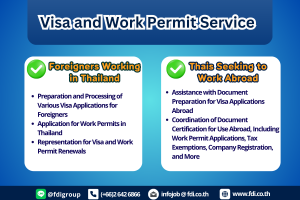
Contact Us
- Facebook: FDI Group – Business Consulting
- @fdigroup
- Phone : 02-642-6866, 02-642-6869, 02-642-6895
- E-mail : infojob@fdi.co.th
- Website : www.fdi.co.th
บริการรับต่อวีซ่า Work Permit ประหยัดเวลา บริการด้วยความเชี่ยวชาญ

บริการรับต่อวีซ่า Work Permit...
Read More
วีซ่าธุรกิจ คือวีซ่าอะไร ต้องใช้เอกสารอะไรบ้าง ?
ไขข้อสงสัย วีซ่าธุรกิจและใบอนุญาตทำงาน (Work...
Read More